
Dodge County Court Calendars Explained
The Dodge Clerk calendar index lists three items. There is an upcoming criminal Status Hearings / Pleas calendar. There is also a criminal Plea Calendar. A Civil Calendar Call rounds out the set. The August 28, 2026 criminal PDF runs nine pages. It carries the title “Dodge County Plea Calendar,” stamped CR SUPERIOR COURT CRIMINAL. The September 2, 2026 civil PDF is a 65-page Civil Calendar. It is set for 9:00 AM before Judge Sarah Wall.
These PDFs are generated lists, not one master calendar for every Dodge court. The Superior Clerk's route skips Magistrate, Probate, Juvenile, municipal, and federal settings entirely. Pair the official calendar page with the county's court-services route and the right clerk or chambers contact, mainly when the hearing is near or the PDF is stale.
Read the criminal and civil titles literally before searching a file. The calendar family hints at which field names and event labels appear. The court label tells you the list belongs to Superior Court rather than a city or lower-court route.
Dodge County Court Calendar Labels
Local labels describe event families, nothing more. A “Plea Calendar” is a criminal list built around pleas and related settings. “Status Hearings / Pleas” mixes progress events with plea-related entries. “Civil Calendar Call” marks a civil scheduling or list-call event. No label alone proves a final disposition or trial outcome. A label is a clue.
| Label | Likely use | Verify |
|---|---|---|
| Status Hearings / Pleas | Criminal progress and plea-related settings | Whether the case moved or received a later date |
| Plea Calendar | Criminal list focused on pleas and related events | Whether a plea occurred and what entry followed |
| Civil Calendar Call | Civil scheduling, readiness, or list-call work | Whether trial placement or another setting resulted |
Finding Your Court Date
Use every route available for a Dodge County case lookup. The web calendar is a starting point. The Clerk of Superior Court can confirm a Superior setting by phone or at the counter, while Georgia E-Access lists Dodge Superior but needs an account through a provider. A lower court or city clerk may hold a date that never reaches the Superior calendar. And a notice served on a party can control even when an old PDF still sits online.
- Read the notice, citation, or case number and identify Superior, Magistrate, Probate, Juvenile, municipal, or federal court.
- Open the Dodge Clerk’s calendar page and search the downloaded PDF by case number, date, or event label.
- Check Georgia Courts E-Access or the clerk’s case-search destination when the matter is a Superior case, noting account or redirect limits.
- Call the correct clerk or assigned court with the full case number and ask whether the date, time, and courtroom still stand.
- If travel is needed, confirm the public counter location and any current court-facility notice before going.
The court does not advertise a free public terminal, a daily printed calendar, or a public copy station. Ask the clerk what in-person access exists before counting on any of it.
How to Read a Court Setting
Calendar fields each answer a different question. Date and time locate the event. Courtroom and judge show where it sits and before whom. The event or cause names the setting family. Case number, filing date, and caption let you match the right matter. A code or status field may need the clerk to explain it.
| Date | Scheduled court day in the PDF snapshot; verify if a later notice exists. |
|---|---|
| Time | Observed criminal style includes 09:30 AM; the civil sample uses 9:00 AM. |
| Court or event | CR SUPERIOR COURT CRIMINAL, Plea Calendar, Civil Calendar, or Calendar Call. |
| Judge | Assigned judge label or name on the list; do not infer from a case-number suffix. |
| Case and cause | Case number, caption, count, offense, TORT, or other field that matches the event. |
| Status and note | Literal code or free text; ask the clerk before translating an unknown value. |
Dodge County Court Date General Guide
The Oconee Judicial Circuit warns that calendar dates and times should be verified with the Clerk of Court. That warning fits Dodge's PDF workflow perfectly. A setting list helps you find a case and see the event family. But a continuance, reset, correction, emergency order, or later court notice can change it at any point.
The Oconee circuit page gives the regional context, while the Dodge Clerk supplies the local confirmation. A public stream is only a viewing supplement. The Eighth District live-stream page posts Dodge Courtroom 1 and Courtroom 2 links. It cautions that sensitive testimony or breaks may be muted.
Planning an appearance comes down to a simple sequence. Find the setting, save the source, verify it. Do not lean on a generated footer. Do not read a reset as a dismissal. Do not treat a stream as a record. The clerk can also say whether a setting belongs to Superior, a lower court, or a city route.
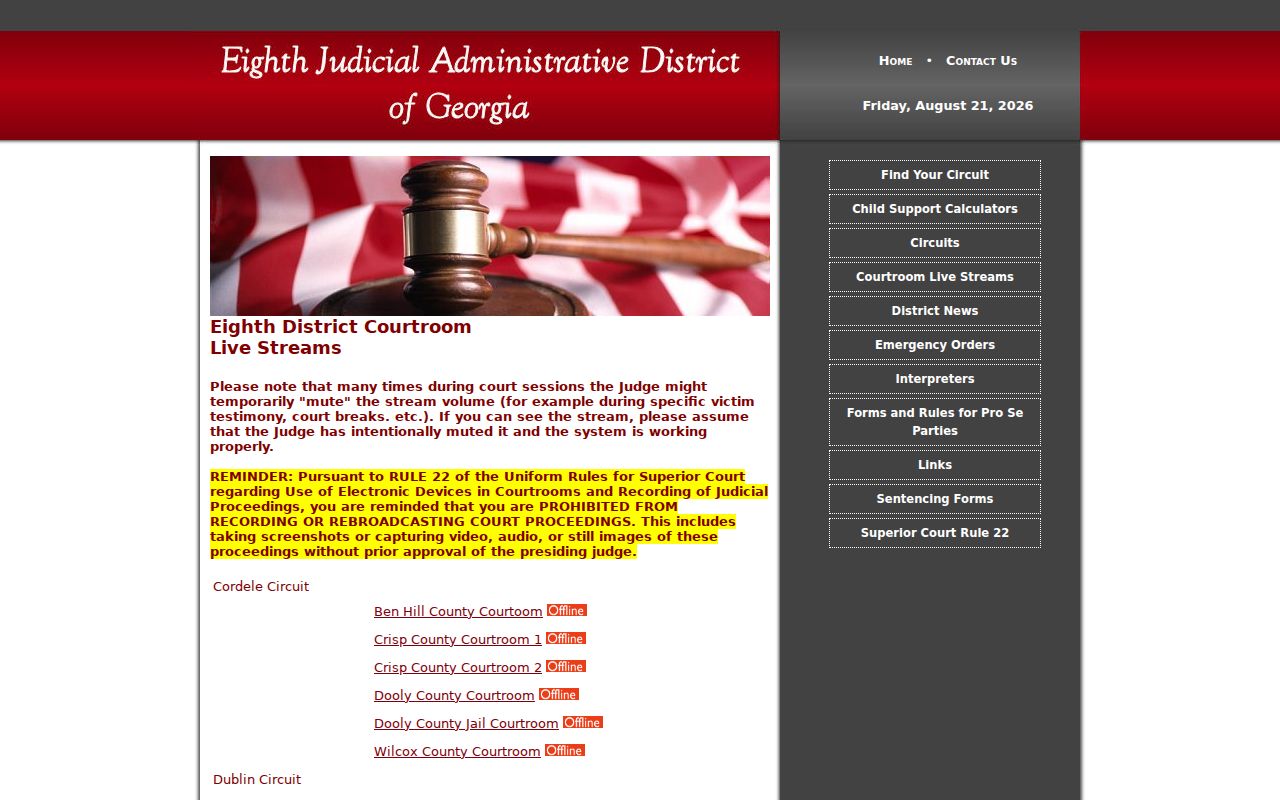
The stream resource can help a reader understand hearing access. Still, it is not a docket, calendar archive, or permission to record.
Continuances, Resets, and Cancellations
A continuance or reset just moves a setting. The case itself keeps going. A cancellation can mean several things. It may be a later order, an event that was held, a correction, or a simple change in the calendar list. Dodge County's public calendar shows only the newest snapshot. So a date that vanishes deserves a question to the clerk, not a conclusion.
Before assuming anything, compare the event label and case number across later criminal and civil PDFs. Ask the clerk directly whether the matter was continued, reset, held, or removed. Bring along any notice or order in the case. The exact docket entry plus the court's current instruction tells a person what to do next.
Dodge County Court Date Changes
A Dodge County court date seems to change. Start with the details on the calendar itself: the title, page, case number, and generated footer. Then check the next PDF. Check the clerk's calendar index too. The official July link may return a cache miss or a replaced file. That is an availability problem, not a canceled case. A quick call to the Clerk of Superior Court can sort a portal glitch from a real docket change.
Ask one precise question: "What is the next setting for this case number?" Need a motion, order, disposition, or transcript instead? Ask for that separately. Court-date questions go to the assigned court or clerk, never to general county administration.
Keep the source details in front of you during the call. Note the PDF title and calendar type. Note the generated date or time, page number, case number, and event label. On a criminal list, note whether the row sat on a plea or status calendar. On a civil list, note the calendar date, judge label, case type, and cause. Those distinctions let the clerk trace a changed setting. The clerk need not treat every PDF as the same docket layer.
If You Miss a Court Setting
Contact the court or clerk directly, and do it fast. Georgia Courts' traffic guidance says a missed citation date requires direct contact with the court, and that same practical rule protects anyone who spots a missed Superior or lower-court setting. A calendar search cannot excuse an appearance or explain what order followed.
Do not rely on an old PDF after a missed date. Call the court that set the matter, give the full case or citation number, and ask what action is required next.
For a Superior case, use the Clerk of Superior Court at 643 Pearl Bates Avenue, Eastman, or call 478-374-2871. Magistrate, Probate, Juvenile, municipal, and federal matters each run through their own office. Write down the result of the call, any new date, and any instruction about a document or order.
Dodge County Court Date Emergencies
Georgia's emergency-order archive holds two orders here. One is a Dodge-specific Hurricane Helene order dated September 30, 2024. The other is an Oconee Circuit order dated January 23, 2025. Those entries carry a lesson. A calendar reader should check the circuit archive after a declared emergency or courthouse closure. The state closure page gives general guidance. The court or clerk confirms a local setting.
Dodge's judicial-building feasibility work adds a second kind of change. The 1908 courthouse is under assessment. The county has published condition and feasibility reports. If a project advances, the public counter, courtroom, terminal, or calendar geography could shift. Check current official notices before you travel.
A setting question also needs the right level of detail. One person may need only the next appearance date. A records request may need the event that caused a reset, the order that continued the matter, or the notice served after an emergency closure. Say which you want when calling. "Is the case on the calendar?" and "What document changed the setting?" are not the same request.
The county's public meeting and facility material can explain why an address or courtroom reference changes. It cannot decide which notice controls a case. Keep a copy of the citation, summons, calendar page, or clerk message that supplied the date. If the sources conflict, the assigned court or clerk should identify the current entry. The Georgia emergency-order archive is the source for statewide or circuit operational notices; the assigned Dodge court still confirms the individual setting.
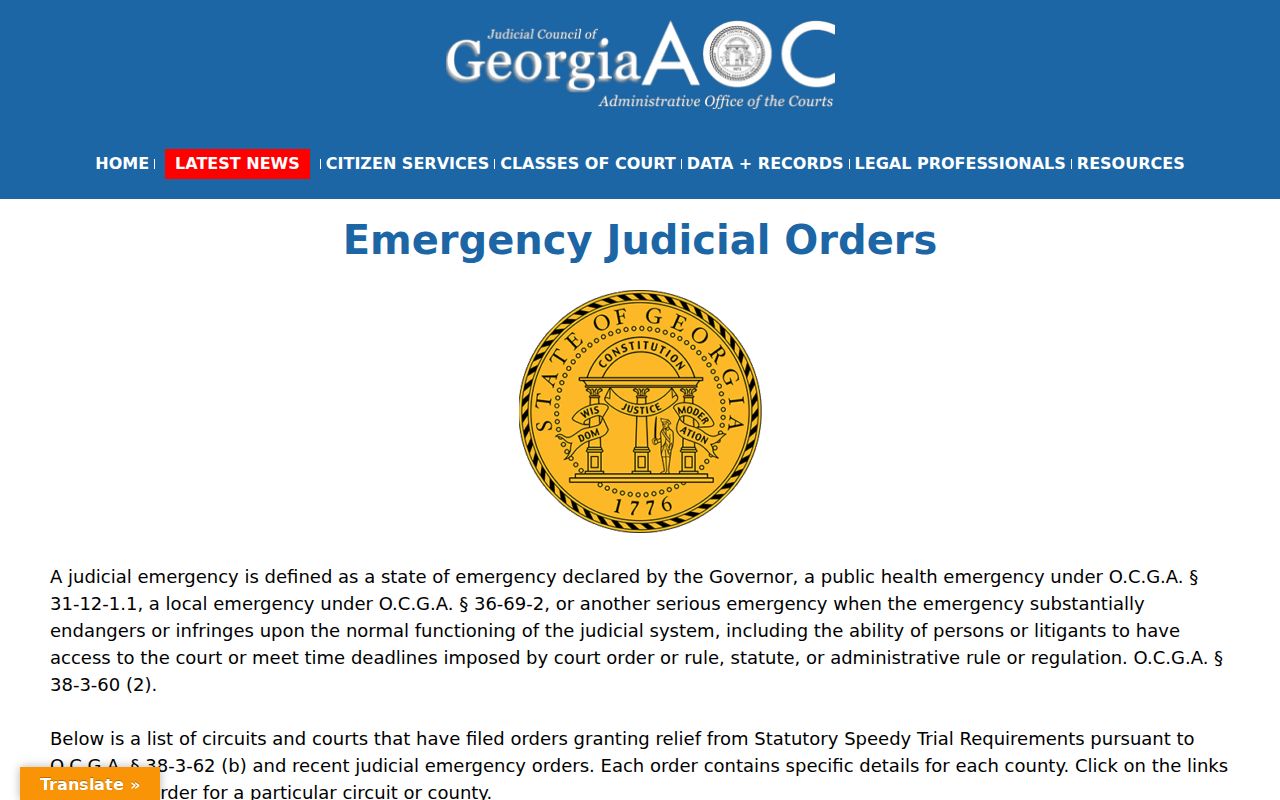
Verification, not a substitute: the emergency-order archive confirms how the courts are operating; it never replaces a case-specific notice from the assigned Dodge County court.