
Searching Dodge County Civil Dockets
The civil desk at the Dodge Superior Clerk handles civil actions day to day. Its calendar page posts a Civil Calendar Call and other civil PDFs. The official e-filing chart goes further. It marks Dodge Superior Court as mandatory for PeachCourt filing. Filing and searching are two different jobs, though. A system that accepts pleadings will not always hand a free, complete case register to a public reader.
Start with the case number when you have one. Without it, gather more. Collect the full caption, an approximate filing date, the cause, and the court event. The Dodge Clerk calendar index may show a current setting. The circuit's own notice tells readers to verify dates and times with the clerk. That advice is sound. A calendar call does not prove the matter was heard or resolved. Neither does a status event or trial setting.
- Decide whether the matter is a Superior civil case, a Magistrate claim, a Probate filing, a city matter, or a federal case.
- Use the calendar PDF or official case-search route to capture the case number, caption, cause, and event label.
- Check service and answer dates when the question concerns case progress, but do not treat them as a ruling on the merits.
- Call the civil desk if an old PDF conflicts with a notice, order, or later calendar.
- Request the exact complaint, motion, order, judgment, transcript, or certified copy needed.
Dodge County Civil Calendar Fields
Take the official September 2, 2026 Civil Calendar as a field guide. It runs 65 pages. It is set for 9:00 AM, and it names Judge Sarah Wall. That document shows exactly how the public setting list is put together. Each line carries a set list of fields. They include the case number, case style or caption, status, case type, filing date, cause, party roles, service dates, answer dates, attorney fields, a note field, time, and a generated footer.
You do not need private names to read it. Match the case number and cause. Then ask the clerk to verify the current setting. The footer and page count prove the PDF is a snapshot made at one moment. They cannot prove every setting stayed in place afterward.
For the circuit layer, the Oconee Judicial Circuit page gives the circuit route. It repeats the advice to verify dates and times with the Clerk of Court.
What happens when a trial-level civil matter gets appealed? The Georgia Court of Appeals handles that later review. Still, the site is no Dodge Superior docket search.
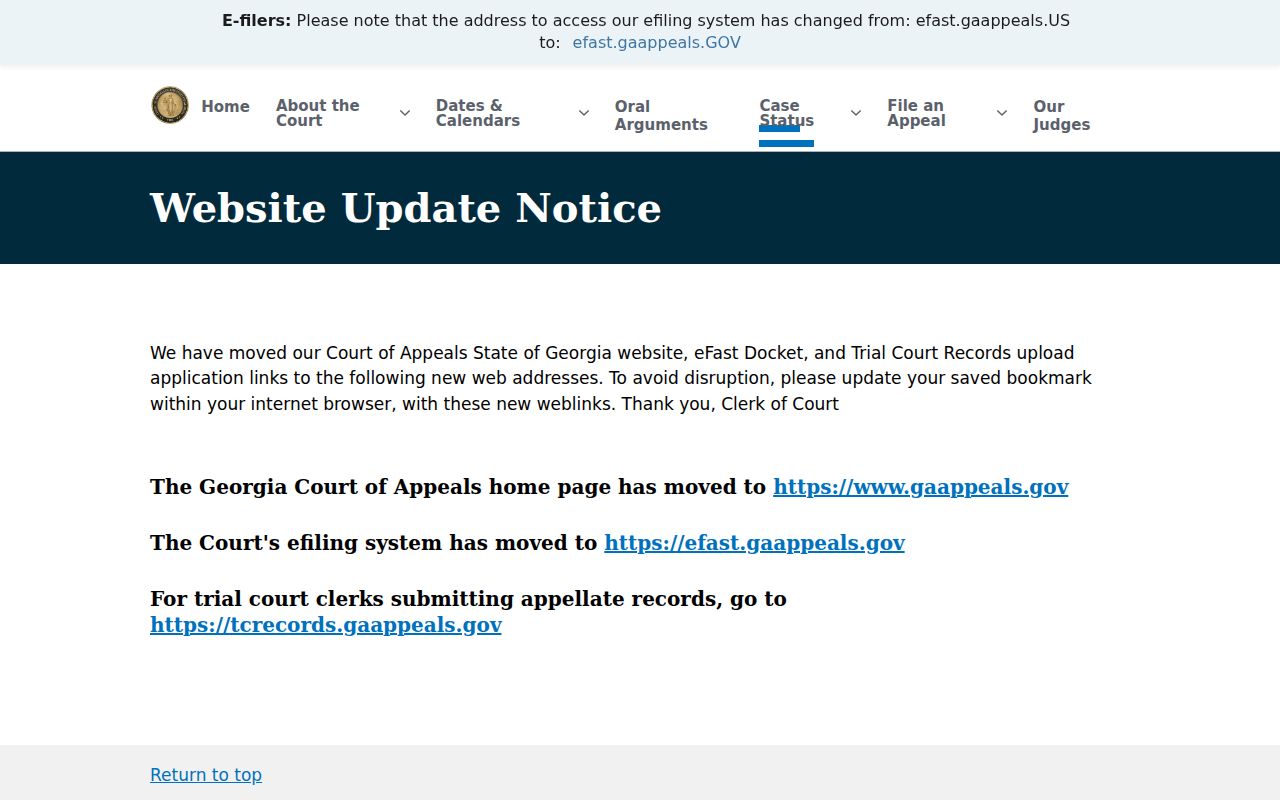
An appellate reference can clarify where a later appeal lands. It is still not a trial-level Dodge civil calendar.
Inside a Dodge County Civil Docket
Uniform Superior Court Rule 39 makes a civil docket more than a date list. The rule calls for many fields. They cover the action number, cause of action, attorneys, parties, filing and service dates, costs, disposition, judgment, trial or jury information, judge, Fi.Fa., appeals and remittitur, storage reference, and summaries of pleadings and motions. The public calendar shows only a slice of that.
A docket line can be public. The complaint, exhibit, settlement, order, or transcript may stay behind a copy request or sealing order. Treat a search result as a map to the file. Quote the precise entry, case number, and date in your request. Never infer a judgment from a setting.
| Case number | Observed civil pattern resembles YYV-number-judge-code; the letters and suffix are not decoded without an official key. |
|---|---|
| Caption and parties | Formal case style and party roles used to match the correct action. |
| Cause and case type | Sample fields include TORT and AUTOMOBILE TORT or AUTO TORT. |
| Service and answer | Procedural dates showing events in the case life cycle. |
| Status and disposition | Recorded status or resolution; a local code may need clerk confirmation. |
| Judgment, Fi.Fa., appeal | Post-hearing or post-judgment fields that are separate from a calendar call. |
Dodge County Civil Case Numbers
Examples in the September civil calendar use a form like 18V-8410-HCK. That pattern helps when sorting a civil PDF from a criminal plea calendar. Criminal plea examples use YYR. Treat it as a habit, not an official decoding key. A final letter may look like a judge code. No public source spells out what the letters or suffixes mean.
Give the civil desk the full printed number, year and separators included. A near match may be a different action entirely. Check the caption, cause, filing date, service date, and event label before requesting a document. A search can return nothing. The cause may be a restricted file, a paper record, a portal problem, or a court class mismatch.
Case-number patterns help locate the right row. They do not tell a reader whether a civil claim is open, won, settled, or dismissed.
Civil Case Types on the Docket
Civil work in Dodge Superior takes many forms. It spans general civil actions, domestic relations, property or title matters, and appeals from limited courts. The sample calendar shows TORT and AUTOMOBILE TORT language. A Magistrate civil claim is its own route, generally capped at $15,000 under the local hierarchy description. Probate filings like estates and guardianships sit in a separate office with a separate docket.
Read the case type and cause as sorting clues only. A cause label tells you what the court's list calls the matter. It settles nothing about liability or which claims survived. The Clerk of Superior Court can help. The office can point you to the filing or order that gives the label real meaning.
| Record family | Typical clue | Custodian route |
|---|---|---|
| Superior civil | TORT, AUTO TORT, domestic or property action | Dodge Clerk civil desk |
| Magistrate civil | Small claim or limited civil matter | Magistrate Court, 478-374-7243 |
| Probate | Estate, will, guardianship, conservatorship | Probate Court, 478-374-3775 |
| Federal civil | Federal jurisdiction or removed action | Southern District, Dublin Division, PACER |
Dodge County Civil Service Dates
Service and answer dates are procedural markers, nothing more. They tell you the civil docket captured when papers were served and when a response came in. That is not a verdict. A counterclaim, crossclaim, motion, settlement, dismissal, or judgment can shift the case onto a different docket path.
Tracing a case history takes comparison. Set the action number, filing date, service date, answer date, calendar call, later setting, and disposition side by side. If an old PDF disagrees with a notice or a clerk call, the current court record controls. Ask the civil desk which entry explains the difference.
Civil Docket Settings and Hearings
A Civil Calendar Call is a scheduling event on the Dodge County docket. The judge's list may show a 9:00 AM time, a cause, a status, and a note. Those fields show what appeared that day. The call may settle readiness or later trial placement. It is not a judgment. One status code, OP, has no published definition. Keep the code exactly as written and ask the clerk before expanding it into a word like open or opposed.
A setting can also vanish from a later PDF. Search the next calendar and ask whether the matter was continued, reset, held, or removed. The Dodge County court dates route explains how to read the setting fields, and the civil clerk confirms a specific case.
Dodge County Civil PeachCourt Filing
Georgia's e-file chart marks Dodge Superior Court as mandatory for PeachCourt. That matters for attorneys and parties filing pleadings. It does not make PeachCourt a public, free, complete docket viewer. The calendar PDF does different work. It lists the settings generated for a date. The filing chart and the PeachCourt site describe the filing system, not the civil record itself. Need a filed complaint, motion, order, or certified judgment? The Georgia Courts e-file chart shows which courts mandate e-filing, the PeachCourt landing page shows the filing platform, and the Clerk of Superior Court supplies the record and current copy terms.
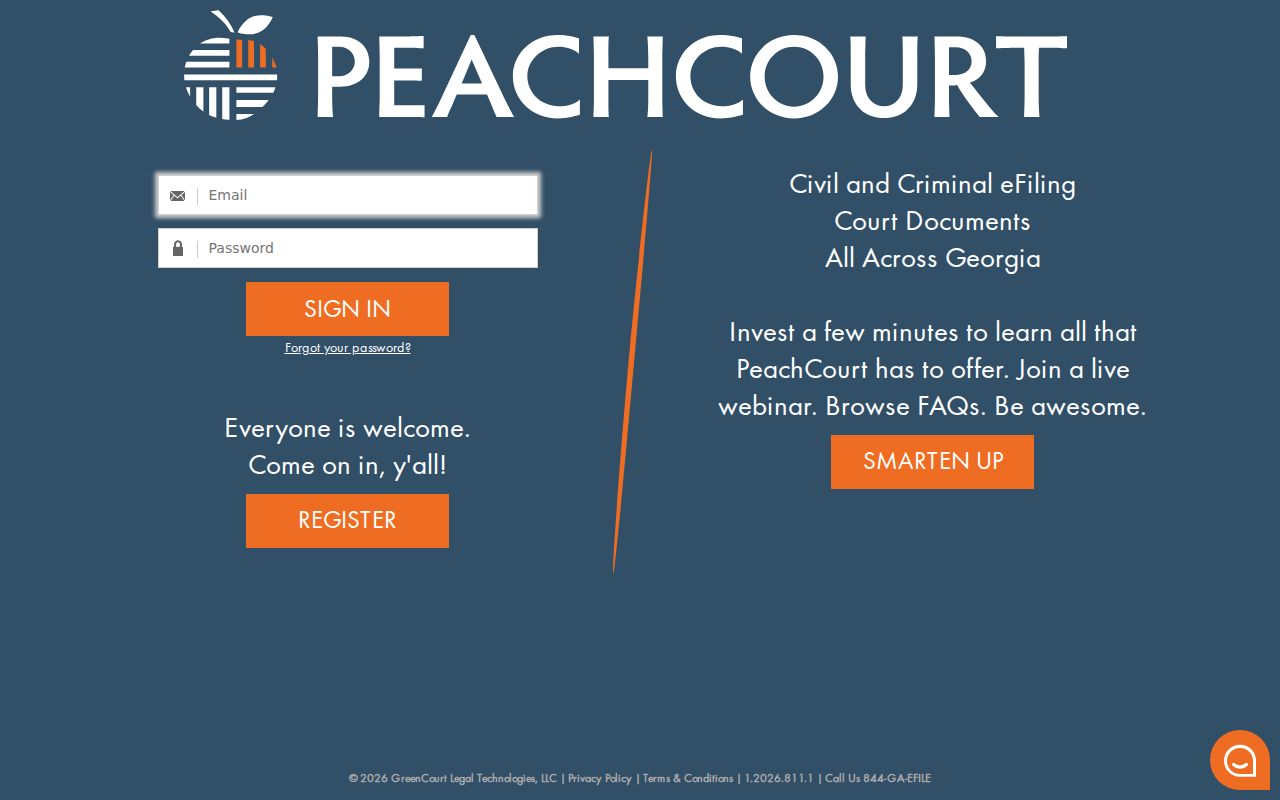
The filing page is a technology layer, not a public case-search or document promise.
Civil Docket Access Rules
Public access comes first under Rule 21. A judge can narrow it, though, when privacy harm clearly outweighs public interest. Rule 21.1 demands a specific order. It must spell out the part limited, how long it lasts, and why. Identifiers get protection under Rule 21.6 when protective orders are filed. Adoption, juvenile, domestic, and protective cases all call for extra care.
Georgia's Open Records Act helps with county administrative material. It is not a universal shortcut into a court file. The Uniform Superior Court Rules set out the framework for access. Ask the clerk a direct question. Does a public redacted version, a sealed document, or a certified copy exist for your case?
The Supreme Court of Georgia sits at the top of the state appellate system. Its page explains its role as a later review route. It does not keep the Dodge Superior civil calendar. Nor does it hold the trial-level file.
An appellate resource explains a later review path. It does not replace the Superior civil docket or the clerk-held file.
Dodge County Civil Status Code
One status field shows OP. No official source defines it. A local clerk may know it at a glance. A public reader should not expand the code as open, opposed, or anything else without confirmation. Copy it literally and ask. A guess is worse than a question at the civil desk.
The same rule applies to a missing setting. A later PDF may drop a case because the event moved, the list changed, the matter was held, or the file is restricted. Compare the case number and caption first. Then ask the civil desk whether the current docket, notice, or order controls. That keeps a research clue separate from an official civil record. A careful request names the literal status, the calendar date, and the page it appeared on. The clerk can then explain a local meaning or a later entry. The uncertainty stays honest that way.